
Category: Golden Nuggets of Wisdom

  • Fifteen Minutes of Fame Why Everyone Wants Theirs

    A World Obsessed with Recognition

    In an age of selfies, viral content, and influencer culture, it seems everyone is seeking their fifteen minutes of fame. Coined by artist Andy Warhol in the 1960s, the phrase predicted a future where fame would be fleeting—but accessible to all. Fast forward to today, and that future is now our reality. From TikTok dances to podcast appearances, fame has never been so democratised—or so desired.
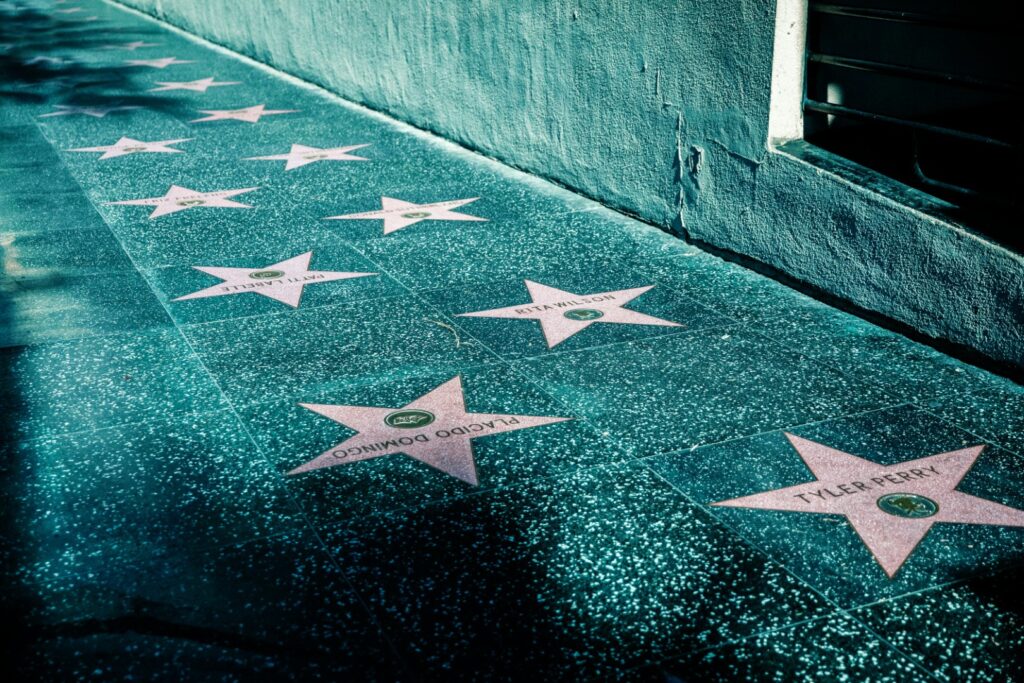
    Fifteen minutes of fame

    But why do so many people crave it? And what makes this need for visibility more prominent now than in the past? Let’s explore the reasons behind our cultural fixation on becoming famous, even if just for a moment.

    The Allure of Attention: Why People Want to Be Famous

    Fame, for many, represents validation. Being known and admired gives people a sense of worth, success, and importance. In a competitive and often overwhelming world, recognition from strangers can feel like proof that we matter.

    Psychologists suggest that the desire for fifteen minutes of fame is closely linked to self-esteem and identity. When traditional markers of success—like home ownership or a stable career—feel out of reach, fame becomes a new symbol of “making it.” It’s not just about being known, either. It’s about being seen, heard, and remembered.

    There’s also an economic incentive. Social media fame can translate into real income through sponsorships, brand deals, and merchandise. For younger generations, becoming a YouTuber or influencer isn’t just a hobby—it’s a career goal.

    Fifteen Minutes for Everyone: Technology Changed the Game

    In the past, fame was reserved for a select few—film stars, musicians, and athletes. It was largely gatekept by the media and entertainment industries. Today, anyone with a smartphone can become famous, even if only temporarily.

    Social media platforms have made fame scalable and accessible. A viral tweet or Instagram reel can catapult an unknown person into the public eye overnight and get them their fifteen minutes of fame. TikTok, in particular, thrives on this fleeting fame—highlighting trends, creators, and moments that often burn bright and fade fast.

    Reality TV has also played a huge role in normalising “everyday fame.” Shows like Love Island or The Apprentice create instant celebrities out of regular people. Their fame might not last forever, but the exposure often leads to lucrative opportunities.

    Validation in the Digital Age: Likes, Shares and Ego

    Today’s fame isn’t just about TV appearances or magazine covers—it’s about engagement. The number of likes, comments, and followers has become a kind of social currency. For many, going viral is less about the message and more about the numbers.

    This can have a profound psychological impact. Studies show that social media can trigger dopamine responses similar to those caused by drugs or gambling. The pursuit of digital validation can become addictive—driving people to create increasingly outrageous or attention-seeking content.

    In short, fame today is often shallow but instantly gratifying—and that can be enough to fuel the desire for it.

    Why It’s More Common Now Than Ever

    Several cultural shifts have made the fifteen minutes of fame more common:

    • Social Media Algorithms: Platforms reward engagement, often prioritising controversial or sensational content. This encourages extreme behaviour or “shock value” content that can go viral quickly.
    • Cost of Living Crisis & Career Uncertainty: With traditional job security on the decline, younger people are seeking alternative ways to make money—and fame offers both visibility and opportunity.
    • Blurring of Public & Private Life: We now live in an era where sharing your life is normalised. From daily vlogs to livestreams, personal content is now part of public entertainment.

    Fame Isn’t Always What It Seems

    Despite the glamour, fame can have a darker side. Many who achieve viral success report high levels of anxiety, pressure, and burnout. There’s also the danger of being “cancelled” or criticised publicly—something that’s difficult to recover from emotionally or reputationally.

    Additionally, fame can be fickle. Today’s sensation is tomorrow’s forgotten face. With the spotlight constantly shifting, many people find themselves chasing fame just to stay relevant—trapped in a cycle of content creation and self-promotion.

    Chasing the Spotlight or Losing Yourself in It?

    Our collective obsession with fame is a reflection of deeper societal needs—for recognition, validation, and a sense of purpose. While the internet has made achieving fifteen minutes of fame easier than ever, it’s also changed what fame looks like, feels like, and costs.

    In the end, it’s worth asking: is the fifteen minutes of fame we’re chasing truly fulfilling—or just a digital illusion?

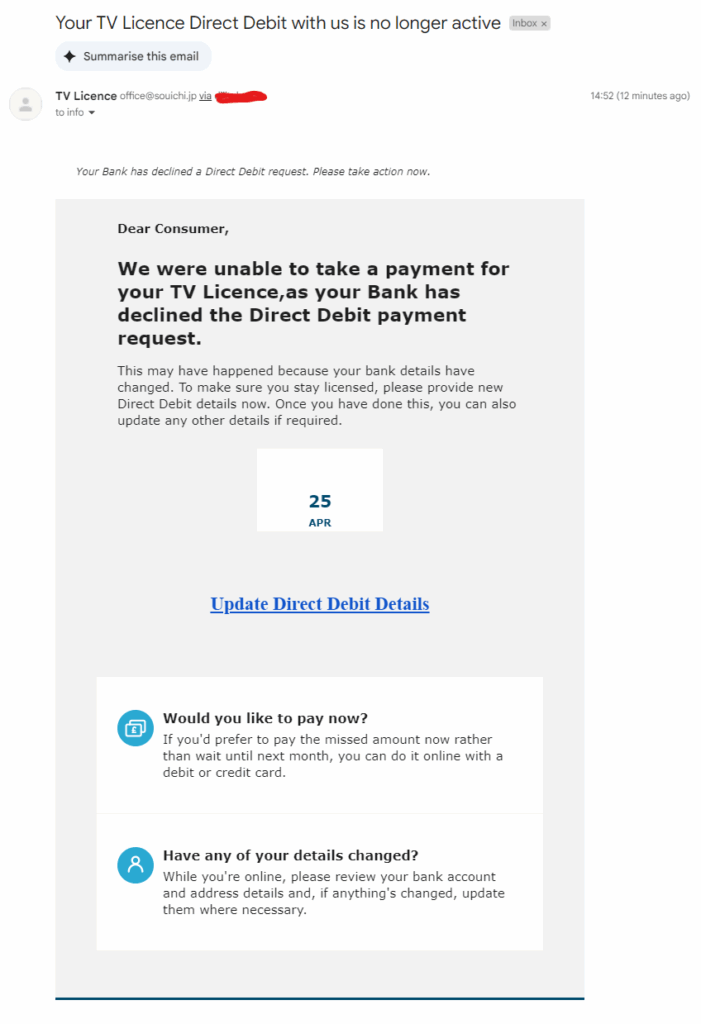
  • Your TV Licence Direct Debit with us is no longer active

    Your TV Licence Direct Debit with us is no longer active

    Oh noes! I haz direct debit problem with the TV licen…. waiiiit a minute. I do not have a TV Licence as I do not need one! lol

    This is the TV Licence Direct Debit scam!

    This email just landed in my inbox;

    TV Licence Direct Debit

    Looks legit? Naaaat.

    Firstly look at the sender email – the TV Licence folks wouldn’t send emails from souichi.jp!

    Secondly, there are no logos or official branding on this email.

    Lastly, the link goes here;

    hXXps://etribunalv2.nakmenangtender.com/reww.html

    Which doesn’t look much like an official URL does it!

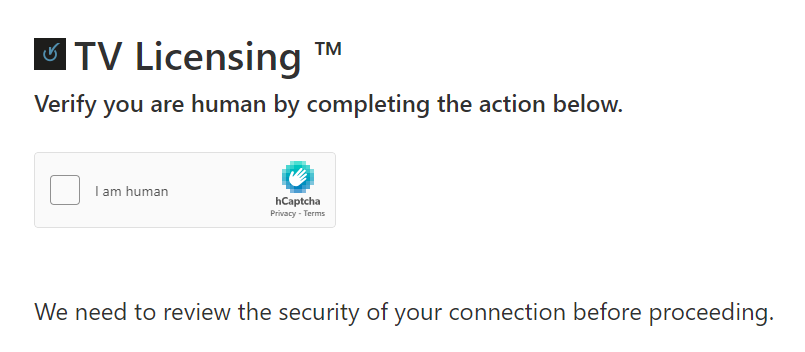
    When clicking the link, we get a captcha page;

    TV Licence Direct Debit

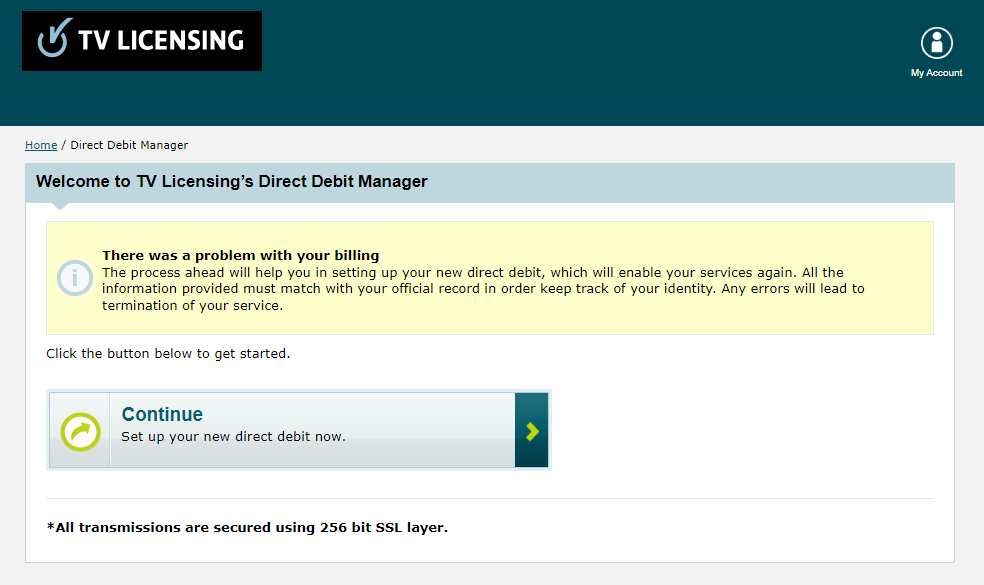
    And then once past this screen we get a reasonably convincing TV Licencing page;

    TV Licence Direct Debit

    The logo looks incorrect, it shouldnt have the black square around it (I checked the official website and they do actually have a black square round thier logo?!

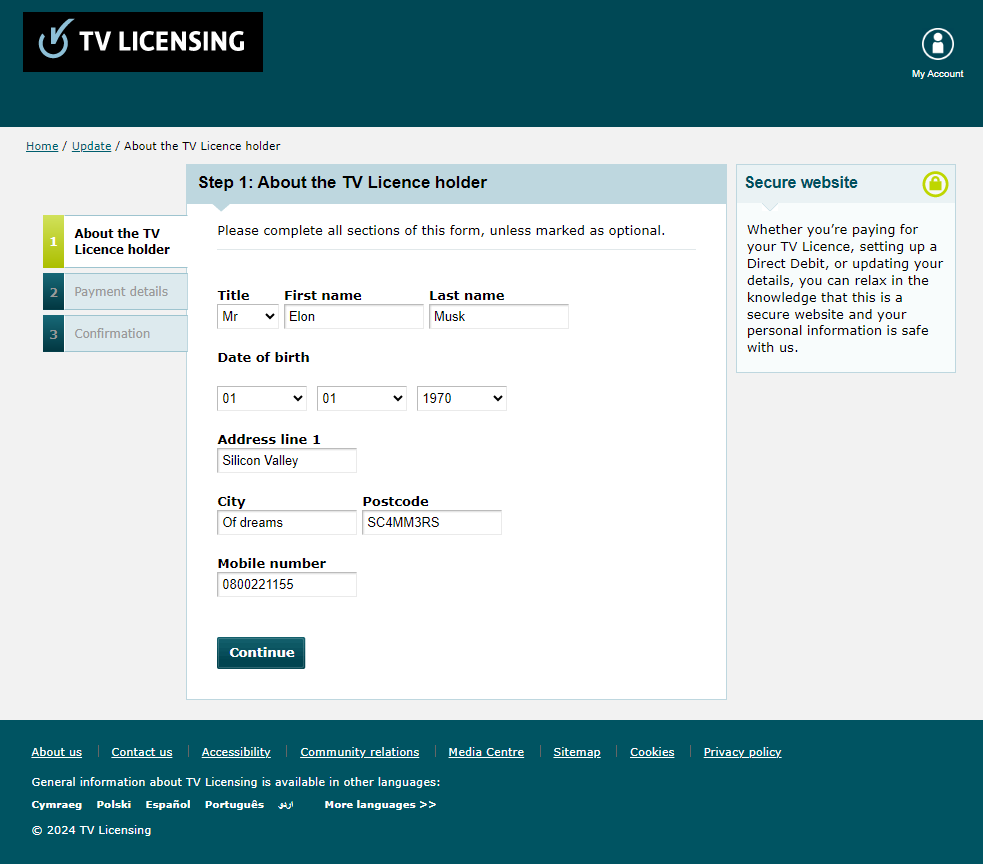
    The wording in the yellow box is dodgy too, “enable your services”?? Not having a TV licence doesn’t stop any services from working, so this should raise some red flags at least! I pressed continue and filled the form out;

    TV Licence Direct Debit

    Heh.

    And the next screen, unsurprisingly, is asking for my CREDIT or DEBIT card information. (I lost this screenshot haha)

    Why would they need this info if this was to set up a direct debit? Thats not how direct debits work!

    This whole scam is designed to simply get your name, address and your FULL card details, so they can buy loads of gift cards and BS at your expense;

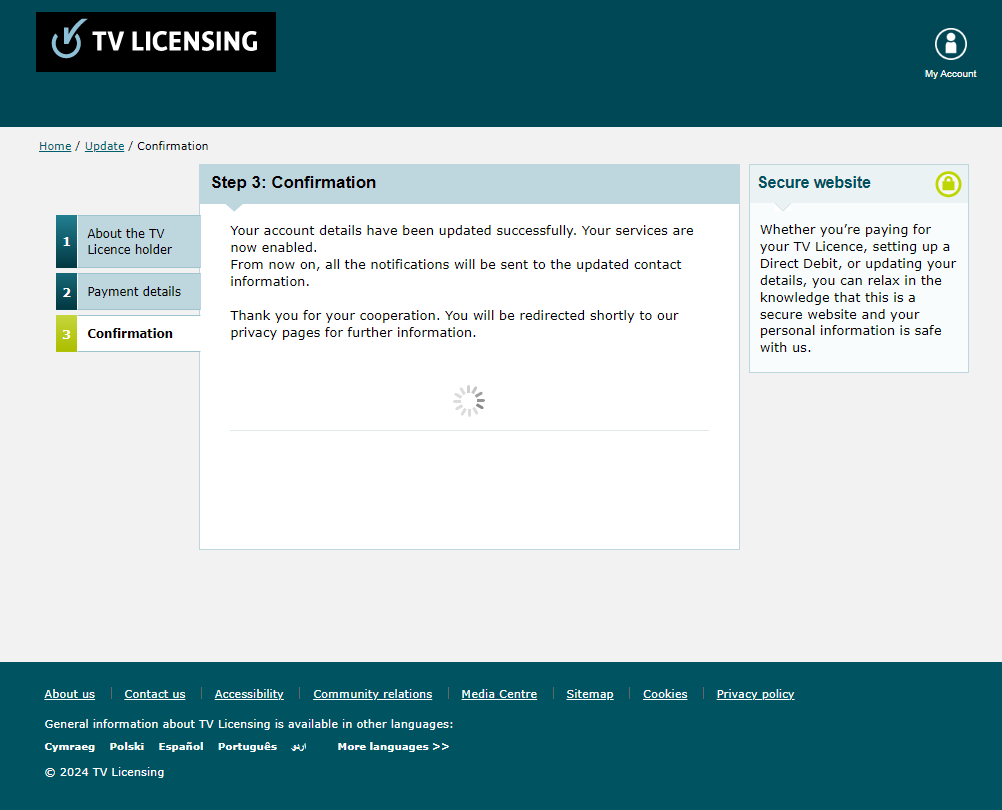
    TV Licence Direct Debit

    Confirmation page, then takes you to the OFFICIAL TV Licencing website, so that the victim thinks the whole thing has been official and correct.

    DO NOT fall for these type of scams – If you get an email claiming there is an issue with something like your TV licence then;

    1. Check the sending email address – does it look legit?
    2. Hover over buttons and links (DO NOT CLICK) and look in the bottom right corner of your browser, and see if the URL that shows up looks legit.
    3. If in doubt, contact the organisation via the OFFICIAL contact details that you get from a Google search. Do not use info in their email as it would have been changed to be theirs.

    Be scam-wise, folks!

    Official TV Licence Website: https://www.tvlicensing.co.uk/

    TV Licence Direct Debit

  • Storytelling – Back to the old ways

    In a world full of short form videos, social media and AI, its nice to see people still out there writing stories and inspiring people the old fashioned way – by Storytelling.

    Storytelling

    I have been following a few friends of mine, as they pour their imagination and their creativity into their work and start to get things published on various independent platforms.

    Rob Bernardi

    I met Rob many years ago while I was an IT technician and was doing some work in Scotland. We were stood next to each other in a queue waiting to be served our evening meal in a hotel. The service was terrible and we were waiting ages – when it came to Robs turn he asked me if I wanted to sit with him so that I didnt have to wait another hour.

    I accepted, and during our meal we talked about what we did, and I learned Rob was in IT too but wanted to follow his passions of being a journalist.

    Rob and I kept in touch, and when he finally took the leap into self employment I was ecstatic for him – his work is now featured all across the web, including posts on Campbell Watson and The Ice Age.

    Sophie Davies

    Sophie and I worked together when I worked in Digital Print and Media. She was brought in to do Sales as her knack for building relationships with clients was second to none. Sophie didnt work there long, but when she left to move down south and become a journalist she made sure to leave us all info so we could follow her journey.

    Ive kept an eye on what she has been doing, and now Soph’s work has popped up on a few publishing website, like YourBaseline amongst others. So proud of you Soph!

    Ethan Miller

    The story about how Ethan and I became acquainted is slightly different to the others, we only know each other due to the internet, however I have know Ethan longer than everyone else mentioned so far in this post.

    Ethan and I met via an online chatroom on CamFrog about 25 years ago. We were both regular visitors to a UK Chat room and got on instantly due to a similar sense of humour. Ive kept in touch with Ethan ever since and watched as he made his mark on the publishing industry.

    You can find his work on many platforms, I think his best work is the stuff featured on ColourFruit, though.

    Alex Mason

    I first came into contact with Alex when a client of mine brought him in to help them with some PR. Alex has a background in home services and has a wealth of knowledge in this area. I dont know him personally like I do the others, but I have still kept in touch with him as he is good at what he does and ive been keen to see his skills and success grow.

    He actually owns his own website, visit him and read his work over on Material Essentials.

    Let me know what you think of my friends work – im super proud of them all and hope they continue to be successful and add value to the world around them.

  • Why the EU “Link Tax” is an absolute load of sh!t.

    You may or may not have heard, about the EUCD, European Union Copyright Directive – or Article 13 as it is being referred to. Well, its a load of documents wrote by old people who think the internet is evil, and it seems at NO POINT have they spoken to anyone that actually makes bits of the internet to see if their ideas are a load of horse sh!t or not.

    Well, im afraid it is mostly horse sh!t.

    The bit of Article 13 that left me absolutely speechless was the part about the “Link Tax” and how the EU want to see social networks and other platforms pay a licence fee to publishers, for the privalige of showing a snippet of their work in the link preview that we’re all so used to seeing;

    So lets look a little closer at this link preview melarkey…

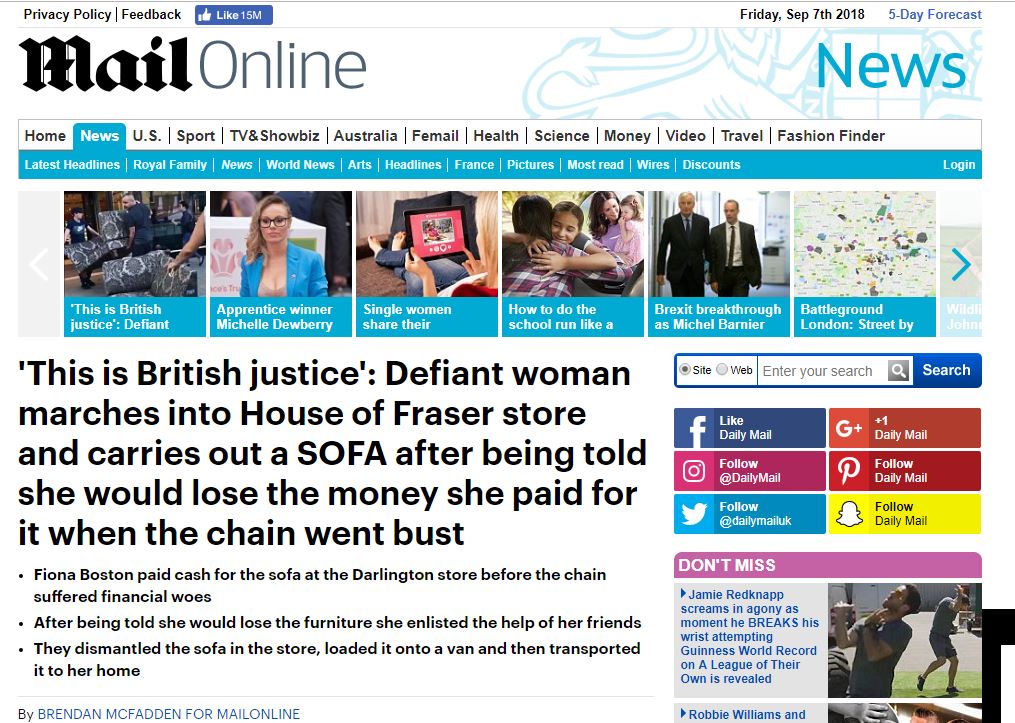
    A random article from the Daily Fail;

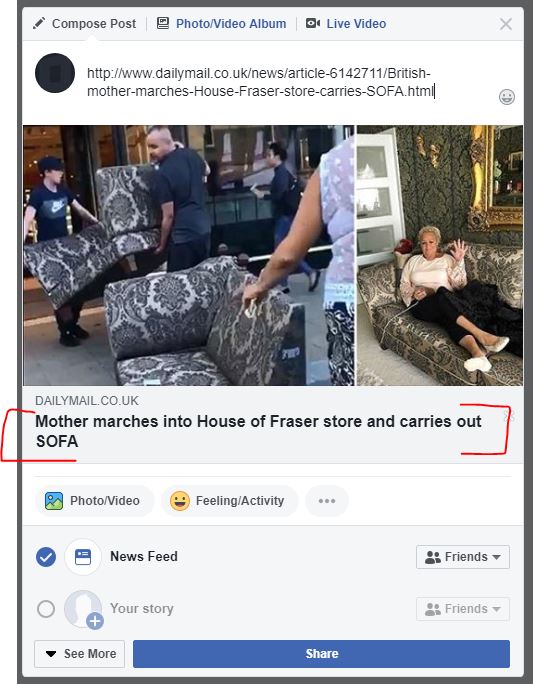
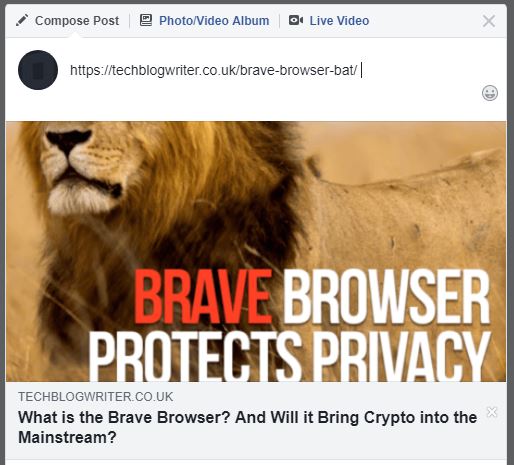
    And if I go to post a link to this on Facebook;

    Hmm, I dont see that title on the image of the Daily Fail… so where is it?

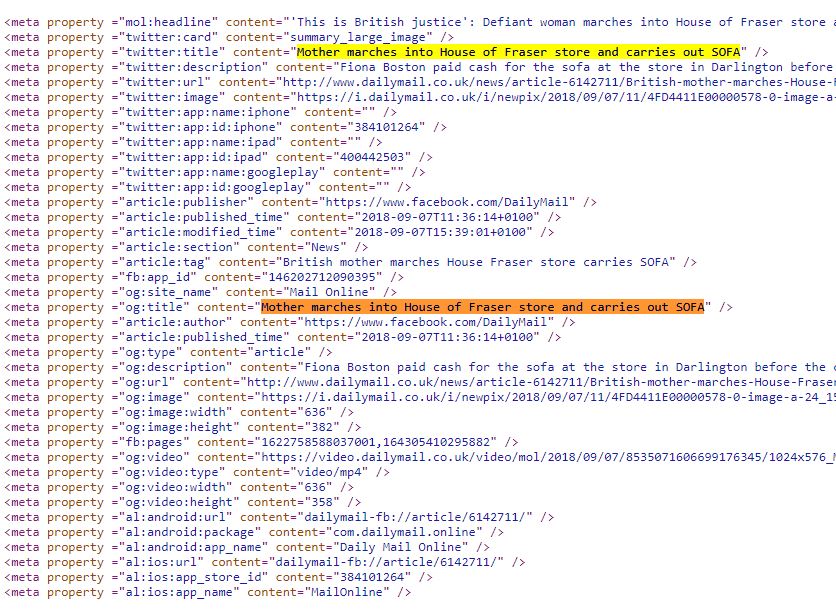
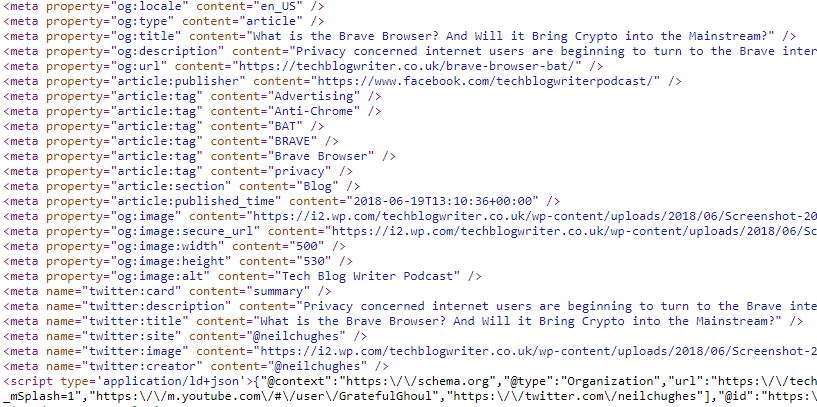
    Oh its there…..
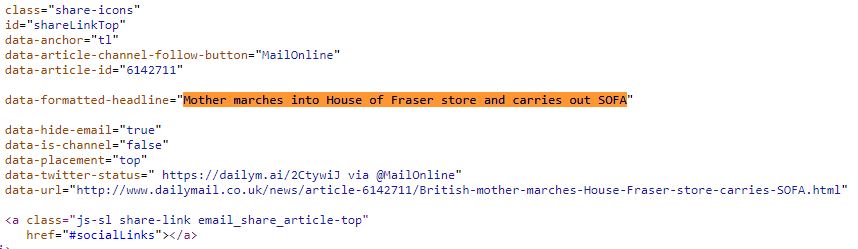
    Ah, its there too….

    “But what is that code gobbledegook, Olly?” I hear you say?

    It is the source code of the daily mail page, and the highlighted elements are the exact title Facebook used, and the title is specifically created and applied by the Daily Fail… themselves…

    So wait, publishers have COMPLETE CONTROL over the content that social networks use in the link previews? 

    Pfft… surely not for smaller publishers, though… right?

    Wrong.

    Admittedly, this preview uses the post title, BUT;

    This publisher has full control over the content used in link previews.

    Which means the point of the link tax, is to STOP the social networks from using the specifically-written-for-social-media link preview content that the PUBLISHERS THEMSELVES CONTROL and place on their websites…

    Am I the only person that finds this absolutely unbelievable?

    I wish people would let the internet be the internet.

    If it aint broke, dont fix it.

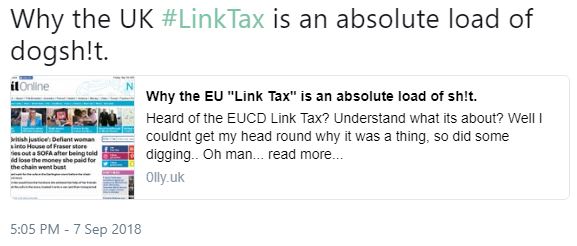
    EDIT: Posted a link to Twitter, and Twitter uses the meta description, which I HAVE FULL CONTROL OVER!