I have been plant based for 12 years, and haven’t eaten the flesh of another being for at least 20, maybe more like 25. When I first went Vegan I did what most do: I shouted from the roof tops as I was horrified that people were still contributing to something so awful.
Then, after a few years and many heated debates – I backed off. I never stopped being Vegan, and I never stopped standing up for the little guy but I got off my soapbox as I got busy with life and I also felt like shouting at people and making people feel bad about things they have done their entire life wasn’t the way to go about stuff. I mean, we are told to drink cows milk for strong bones, and told we need to eat meat for *reasons*.
So for a decade I have flown the flag, but I haven’t really pushed anything forward and I have been a reactive advocate for Veganism, but I haven’t been proactive about anything.
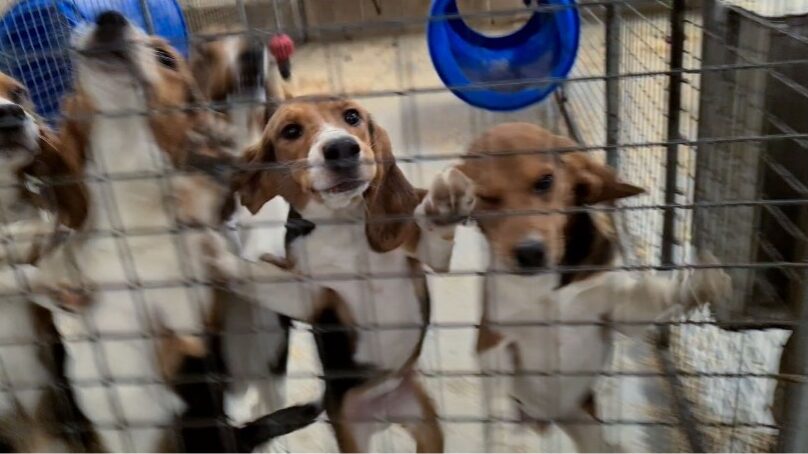
That was until my friend invited me to Camp Beagle. And upon arriving, within minutes a fire had been sparked inside me that isn’t going out any time soon
I realised I have a particular set of skills that can be very useful to Protest groups and Activist groups.
I have been making tiny bits of the internet for 30+ years, and a lot of groups are often run by teams of wonderful volunteers – but often they lack the funds or the skills to run a website and mount a proper digital effort to go alongside their real-world efforts on the front line.
So – if you are an activist group, a protest group or someone trying to raise awareness about a cause – then reach out, as I will help. Free websites for activists and protest groups.
All I would ask if you buy your domain name so it’s in your name, owned by you/your organisation. I will provide hosting, websites and ongoing support completely free of charge.
I want zero recognition or credit for this, I have no agenda and I am not doing this for any reason other than because it’s the right thing to do. I like to go to sleep at night knowing nothing has suffered on my behalf, and if I can help worthy causes every day too – then I’ll sleep even better.
I can’t donate money to every cause, I cannot attend every protest or demonstration – but I can help you mount a digital offensive against evil corporations and shady groups. I can help you rank in Google, I can help you build tools to contact MP’s or reach out to people.
Comment below (I won’t publish your comment) as it’s the best way to contact me without me revealing my contact info. If you can find my contact info, then use it.
Together, we can make a difference.
Free Websites for Activists FAQs
Do you offer free websites for protest groups?
Yes, completely free. I’ll build and host your website at no cost whatsoever. All I ask is that you register your own domain name so it’s owned by you and your organisation. Everything else, including hosting, design and ongoing support, is on me.
Can you help with free SEO for activists?
Absolutely. SEO is one of the most powerful tools an activist group can have, getting your message in front of people who are already searching for your cause. I can help with on-page SEO, content strategy and Google rankings as part of the free support I offer.
What kind of free website support do you offer protest groups?
I can build you a proper website from scratch, sort your hosting, help you rank in Google, and build tools to help you reach MPs, journalists or the public. I’ve been building websites for 30 years and I want to put those skills to good use for causes that matter.
Digital Services for Protest Groups & Activists
Disclaimer: Obviously there are going to be certain causes or agendas that may go against my own core beliefs and that I may not be able to get behind. I am for the planet, for the animals and for all humans – I am not going to get behind anything racist, offensive or hurtful towards particular races, religions or species.
This is Part 2 of a series exposing the people and companies behind the UK’s laboratory animal supply chain. This post focuses on Scott Marshall, CEO of Marshall BioResources. All claims are based on public records and cited sources listed at the end of this article. Part 1 covered Russell Morgan and Impex Services International Limited.
Scott Marshall is the CEO of Marshall BioResources, a company that breeds tens of thousands of beagles, ferrets, cats, and minipigs every year and sells them to laboratories for toxicology testing, drug trials, and chemical experiments. His family has profited from animal suffering for nearly nine decades. His company has faced criminal convictions, federal violations, disease outbreaks, and whistleblower exposés. He has responded to almost none of it.
Who is Scott Marshall?
Scott Marshall is a third-generation animal breeder. His grandfather, Gilman Marshall, founded Marshall Farms in 1939 in North Rose, New York, originally raising ferrets for hunting.
In 1962, the Marshall family spotted a bigger opportunity. The FDA had tightened regulations requiring more animal testing before drugs could reach the market. The Marshalls responded by establishing a colony of beagle dogs bred specifically for laboratories. The business model has not fundamentally changed since.
Scott Marshall took over as CEO in January 2003. He holds a law degree from Southern Methodist University and a BS from Cornell University. Under his leadership, the company expanded into a global operation spanning the United States, United Kingdom, France, China, and Japan.
Scott Marshall is notably silent in public. Beyond calling a criminal conviction of his own employees “wrong,” Scott Marshall has given no substantial interviews or public statements addressing the significant body of criticism directed at his company.
The scale of what Marshall BioResources does
23,000+ dogs confined at the North Rose, New York facility alone at any given time
66,000+ animals total across all operations, including ferrets, cats, and minipigs
2,000 beagle puppies per year bred at MBR Acres, the UK facility in Wyton, Cambridgeshire
Operations in six countries: USA, UK, France, China, Japan, and (until criminal prosecution) Italy
Customers include the NIH, FDA, Department of Defense, Department of Veterans Affairs, CDC, and private laboratories including Labcorp
The company has trademarked the animals themselves: the Marshall Beagle, Marshall Ferret, Marshall Cat, and Gottingen Minipig
Scott Marshall also runs Marshall Pet Products, selling ferret toys and food through Petco and PetSmart. Critics argue this consumer brand allows pet owners to unknowingly fund a laboratory animal breeding operation.
What happens to the animals
Beagle puppies bred by Marshall BioResources are sold to laboratories at around 16 weeks old, still puppies. They are used primarily for toxicology testing: force-fed experimental chemicals, injected with drugs, subjected to inhalation studies.
Beagles are chosen because of their docile temperament – they rarely bite even when in pain – their manageable size, and decades of historical precedent dating back to Cold War-era radiation experiments.
What investigators found inside Marshall facilities
Whistleblower photographs from the North Rose facility revealed:
Puppies killed for being “non-standard”, including one destroyed simply for having different-coloured eyes
Puppies found dead in enclosures alongside large quantities of blood
Four to five beagles crammed into single cages, leading to fights
Management allegedly hiding non-compliant conditions ahead of federal inspections
The USDA record
Since 2007, the USDA has cited Marshall Farms for more than 20 violations of the Animal Welfare Act, including inadequate veterinary care, buildings infested with mice and flies, dogs standing in their own filth, and failure to provide the minimum required space.
In 2023, an official USDA warning was issued (Case Number NY230026). A worker’s hand was amputated by an industrial mixer at the facility, leading to an OSHA citation and an $18,282 penalty.
In 2022, a canine distemper outbreak swept through the facility, affecting 250,000 baby ferrets. Bacterial infections spread through cat and pig colonies, with positive infection rates as high as 92.2%.
Green Hill: when Marshall’s employees went to prison
Marshall BioResources’ Italian subsidiary, Green Hill in Montichiari, Brescia, was one of Europe’s largest suppliers of dogs for research – until it became a crime scene.
In June 2012, environmental group Legambiente and animal rights group LAV filed a criminal complaint. Investigators found that over 6,000 dogs had been killed in a four-year period, either because they could not be sold or because treating them was deemed too expensive.
In July 2012, a Brescia court ordered the facility seized. 2,639 beagles were confiscated and rehomed with families across Italy. When Marshall BioResources demanded the dogs back in 2013, the judges refused.
Three employees were convicted of animal cruelty in January 2015:
Name
Role
Sentence
Ghislaine Rondot
Executive Manager
18 months imprisonment
Renzo Graziosi
Veterinarian
18 months imprisonment
Roberto Bravi
Facility Director
1 year imprisonment
All three were also barred from breeding dogs for two years. The convictions were upheld by the Brescia Court of Appeals in 2016 and the Italian Supreme Court in 2017.
Scott Marshall’s public response to three of his employees being imprisoned for animal cruelty was to call the judgment “wrong.”
Green Hill was permanently closed in 2016.
The UK operation: MBR Acres
Marshall BioResources operates its UK breeding facility through MBR Acres Ltd (Company No. 10742432), an eight-acre site near Huntingdon in Wyton, Cambridgeshire. It is the UK’s only facility breeding beagles specifically for laboratory use.
The corporate structure is layered:
Marshall Farms Group Ltd (USA) controls MFG International Limited (UK holding company, No. 10721257)
MFG International controls MBR Acres Ltd
MFG International also controls BK Star Limited (No. 07016814), which owns B & K Universal Limited (No. 01072412), a breeding operation in Hull producing ferrets, guinea pigs, rats, and mice
The directors of both MFG International and MBR Acres are Cyril Odin Michel Marie Desvignes (French, Director of European Operations) and Andrew David Smith (American)
Puppies are collected from MBR Acres by Impex Services International, the UK’s only independent laboratory animal courier, run by Russell Morgan, and delivered to laboratories including Labcorp.
Camp Beagle
Since June 2021, activists have maintained Camp Beagle, a permanent protest camp outside MBR Acres. It is the longest-lasting animal rights protest camp of its kind in the UK.
Policing has cost Cambridgeshire Police an estimated £1.47 to £2.15 million
In February 2025, the High Court removed an exclusion zone around the facility
Suppliers Avanti and Monarch Gas terminated contracts under public pressure
Animal Rising activists entered the facility and rescued 23 beagles
Celebrity supporters include Ricky Gervais and Peter Egan
Camp Beagle has been nominated for the 2026 Lush Prize
Why this doesn’t have to happen
92–95% of drugs that pass animal testing fail in human clinical trials. Half of those failures are due to toxicity that animal models failed to predict. The average drug takes ten years to move through animal testing and still fails. Modern alternatives are not a distant prospect – they exist now and are gaining regulatory acceptance.
Technology
What it does
Accuracy
Organ-on-a-chip
Microfluidic devices lined with human cells that mimic organ function
87% accuracy for hepatotoxicity (liver chip)
Organoids
Lab-grown miniature organs from human stem cells
Market projected to reach $2.72 billion by 2030
AI / in silico models
Machine learning predicting drug toxicity from biological data
89% accuracy predicting cardiac arrhythmia vs 75% for animal models
3D tissue models
Human cell-based tissue constructs
Replacing skin/eye irritation tests by 2026 under the UK government roadmap
The regulatory landscape is shifting
EU: Banned animal testing for cosmetics since 2013
USA: FDA Modernization Act 2.0 (2022) removed the legal mandate for animal testing. FDA Modernization Act 3.0 passed the US Senate unanimously in December 2025
USA: The EPA committed to eliminating all mammalian testing by 2035
USA: The NIH announced in July 2025 it will no longer fund projects focused exclusively on animal testing
UK: A November 2025 roadmap committed £75 million to replace animal testing, with specific deadlines for skin and eye irritation (2026), botulinum toxin (2027), and metabolic tracking in dogs (2030)
43+ countries have banned cosmetics animal testing
The FDA now aims to make animal studies “the exception rather than the norm” within 3–5 years. Scott Marshall’s company is betting its future on the old world lasting long enough to matter.
Why UK law lets this continue
The Animals (Scientific Procedures) Act 1986 is the primary legislation governing animal testing in the UK. Campaigners and reformers identify several critical failures:
No requirement to prove alternatives were explored – scientists can simply state their own opinion that animal testing is necessary
Hidden deaths – in 2017, on top of 3.72 million animals used in regulated procedures, an additional 1.81 million were bred and killed without ever being used in an experiment
Killing isn’t regulated – killing an animal for its organs does not require a licence if done in a “prescribed way”
The government protects the industry – in November 2025, ministers moved to classify animal testing sites as “Key National Infrastructure,” which would effectively criminalise peaceful protest near these facilities
This is Part 1 of a series exposing the people and companies at the heart of the UK’s live animal testing supply chain. This first post focuses on Russell Philip Morgan, sole director of Impex Services International Limited. Every claim in this post is factual. All sources are listed at the bottom.Part two covers Scott Marshall, the CEO of Marshall BioResources
Russell Morgan is the sole director of Impex Services International Limited – the UK’s only independent courier specialising in transporting live animals to research laboratories. His vans collect beagle puppies from breeding facilities and deliver them to testing labs across the UK and Europe. Without Impex, the supply chain breaks.
This is a profile of Russell Philip Morgan, the company he runs, and why campaigners consider him a critical pressure point in the fight to end animal testing.
Who is Russell Morgan?
Russell Philip Morgan (born June 1980) is a British businessman who co-founded Impex Services International on 25 June 2002, aged just 22. He co-founded the business with Eric Morgan (born February 1950), who served as both director and secretary until resigning in March 2011. The shared surname and 30-year age gap strongly suggest Eric is Russell’s father, making Impex a family business built on transporting animals to laboratories.
Since Eric Morgan’s resignation in 2011, Russell Morgan has been the sole director. No other active directorships have been found under his name in public records.
Detail
Information
Full name
Russell Philip Morgan
Date of birth
June 1980
Nationality
British
Role
Sole Director, Impex Services International Ltd
Director since
25 June 2002 (founding)
Company number
04469169
What is Impex Services International Limited?
Impex describes itself as a “fully validated global courier for the research and pharmaceutical industries.” That corporate language obscures what the company actually does: it is the UK’s only independent courier transporting live animals to testing laboratories.
Field
Detail
Registered name
Impex Services International Limited
Company number
04469169
Incorporated
25 June 2002
Status
Active
SIC code
82990 (Other business support service activities)
Registered address
PO Box 187, Huntingdon, Cambridgeshire PE28 4JF
Operational base
Thrapston / Islip, Northamptonshire
Website
impex-uk.com
Contact
Tel: +44 (0) 8456 021662 / info@impex-uk.com
Bank
HSBC (3 outstanding charges registered)
What does Impex transport?
According to its own marketing materials and industry directory listings, Impex Services International:
Transports live animals of all species for the research and pharmaceutical industry
Is described as “Europe’s largest specialist livestock courier and market leader in the transportation of non-agricultural animals”
Supplies shipping containers for cats, dogs, rabbits, rodents, and non-human primates
Handles DEFRA licensing, LVI documentation, transit documents, and CITES permits
Has over 20 years of airport clearance experience for international animal shipments
The company is listed in the Lab Animal Buyers’ Guide, an industry directory used by laboratories purchasing animals and related services.
How the supply chain works
Russell Morgan’s company is the critical transport link connecting breeding facilities to testing laboratories. The chain works like this:
MBR Acres (Wyton, Cambridgeshire) breeds up to 2,000 beagle puppies per year. It is the UK’s only facility breeding beagles specifically for laboratory use, owned by US firm Marshall BioResource.
B&K Universal (Hull), also owned by Marshall BioResources, breeds ferrets, guinea pigs, rats, and mice for testing.
Impex Services International, run by Russell Morgan, collects the animals and delivers them to laboratories including Labcorp Huntingdon and Labcorp Harrogate.
Impex also handles international primate shipments, clearing animals arriving at UK airports and delivering them to laboratories.
Beagle puppies are collected from MBR Acres at around 16 weeks old and delivered to laboratories where they undergo toxicology testing, drug trials, and chemical experiments.
The scale of the operation
Camp Beagle volunteers have systematically tracked Impex van movements from MBR Acres:
Period
Shipments
Vans observed
2024 (full year)
44
66
First half of 2025
23
39
On a single day in August 2021, Cambridgeshire Police deployed up to 100 officers to facilitate a beagle shipment from MBR Acres – costing taxpayers £46,214, according to FOI data.
Why Russell Morgan and Impex matter to campaigners
Without a courier willing to transport animals from breeding facilities to laboratories, the supply chain cannot function. This is why Impex holds a uniquely important position:
It is the only independent specialist performing this role in the UK
No competitor has been identified in any industry directory or public record
If Impex stopped operating, MBR Acres and B&K Universal would have no established route to deliver animals to UK laboratories
Transport companies in other sectors have already responded to public pressure. Avanti terminated its contract with MBR Acres. Monarch Gas did the same. Multiple airlines have banned the transport of primates and other animals for laboratory use.
Impex continues.
Protests targeting Russell Morgan and Impex
January 2022: Thrapston demonstration
Several dozen protesters from the “Free The MBR Beagles” campaign gathered at Impex’s premises on the Cosy Nook industrial estate in Thrapston, Northamptonshire, to raise local awareness of the company’s role in the supply chain.
January 2022: Home visit
Activists visited Russell Morgan at his home address. Local residents reportedly provided the address and expressed disapproval of his business activities.
August 2024: Facility blockade
40 activists blockaded the Impex facility, blocking vehicles from leaving and hanging banners. Arrests and dispersal orders were issued.
Ongoing surveillance and national demonstrations
Camp Beagle maintains permanent surveillance of Impex van movements from MBR Acres. National demonstrations have been organised at the Thrapston site. Russell Morgan reportedly receives police escorts when collecting animals from MBR Acres – at public expense.
The legal position
Animal transport in the UK is governed by welfare regulations covering appropriate containers, ventilation, journey time limits, veterinary certification, and DEFRA licensing. These regulations govern how animals are transported – not whether they should be.
The Animals (Scientific Procedures) Act 1986 – the UK’s primary legislation on animal testing – does not require scientists to prove they have exhausted non-animal alternatives before applying for a project licence. Applicants can simply state their own opinion that animal testing is necessary.
In November 2025, the UK government moved to classify “Life Sciences infrastructure” as Key National Infrastructure under the Public Order Act 2023. This would effectively shield breeding facilities, transport operations, and laboratories from protest – criminalising the activism that has already driven Avanti and Monarch Gas to cut ties with MBR Acres.
The science has moved on
The animals Russell Morgan transports to laboratories are subjected to tests that fail 92–95% of the time when results are applied to humans. Modern alternatives are gaining regulatory acceptance fast:
Organ-on-a-chip technology: Human cell-based devices achieving 87% accuracy for liver toxicity prediction
AI and computational models: 89% accuracy predicting cardiac arrhythmia, versus 75% for animal models
Organoids: Lab-grown miniature organs derived from human stem cells
3D tissue models: Replacing skin and eye irritation tests by 2026 under the UK government’s own roadmap
The FDA Modernization Act 3.0 passed the US Senate unanimously in December 2025, formally advancing the transition away from animal testing. The FDA aims to make animal studies “the exception rather than the norm” within 3–5 years. The NIH announced in July 2025 it will no longer fund projects focused exclusively on animal testing.
Impex Services International is betting its business on the old world lasting.
Corporate record: Impex Services International Limited
Filing detail
Information
Company number
04469169
Incorporation date
25 June 2002
Last accounts
Period ending 30 September 2024
Next accounts due
30 June 2026
SIC code
82990
Charges
3 registered (3 outstanding) — creditor: HSBC Bank PLC
Officers history
Name
Role
Appointed
Resigned
Russell Philip Morgan
Director
25 June 2002
Active
Eric Morgan
Director & Secretary
25 June 2002
11 March 2011
Theydon Nominees Ltd
Nominee Director
25 June 2002
25 June 2002
Theydon Secretaries Ltd
Nominee Secretary
25 June 2002
25 June 2002
What you can do
Share this article – Russell Morgan operates in relative obscurity. Visibility is pressure.
Support Camp Beagle at thecampbeagle.com – they track every Impex van movement from MBR Acres.
Contact your MP – demand an end to the use of dogs in laboratory testing and faster adoption of human-relevant methods.
This has been something I have wanted to do for YEARS. We have worked with automotive businesses since we first started our business in 2006, and since then – getting good, reliable automotive data has always been a challenge.
The vehicle manufacturers dont want you to have it. And the companies that do have it charge SO much money if anyone wants the privilege of using it.
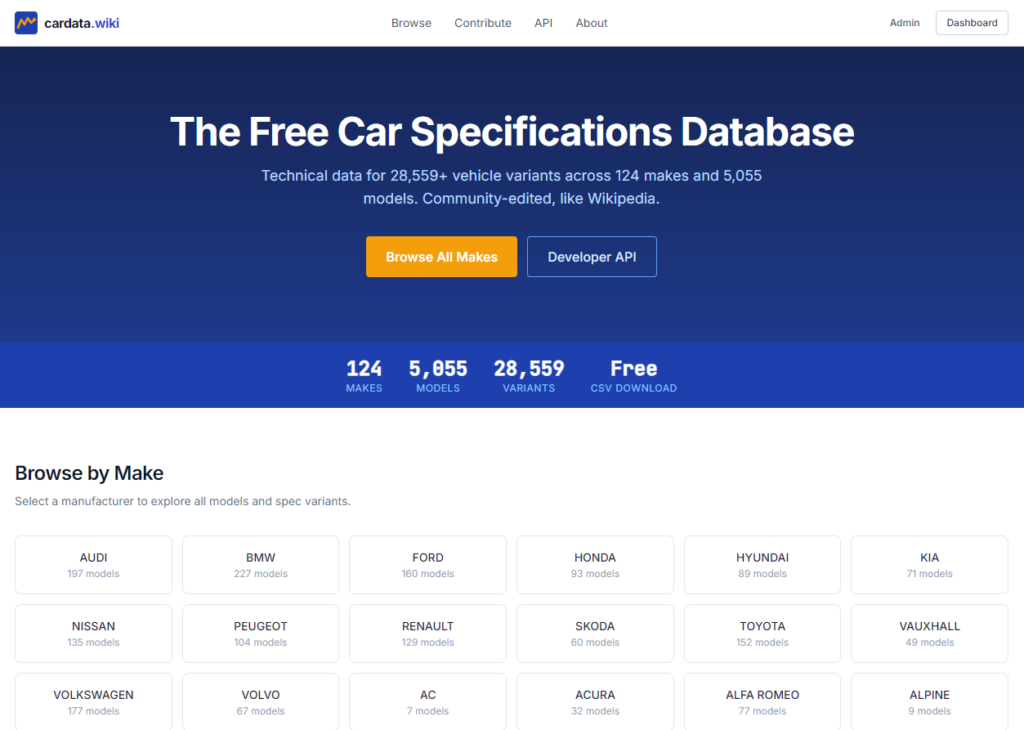
Presenting, CarData.wiki
Haha, yes, another day, another project. This one is a bit different, as this is a free service, like a wikipedia for car makes and models. Users can suggest edits, and add new data that we dont yet have and download ANY or ALL of the data with 2 clicks, on any page, without logging in.
Err, why?
Because car data is common knowledge but rarely exists in a useable format. Well, now it does.
How can you help?
Create an account, send me more data, suggest edits, lets make this the best source of car data in the world.